The Blood-Rust Fire of Harud: When the Boin Weeps Over the Vale
Before the numbing freeze of Chillai Kalan blankets the valley in blinding white, Kashmir pauses for a sacred, bittersweet transition. This is Harud—the season of harvest, nostalgia, and slow combustion.
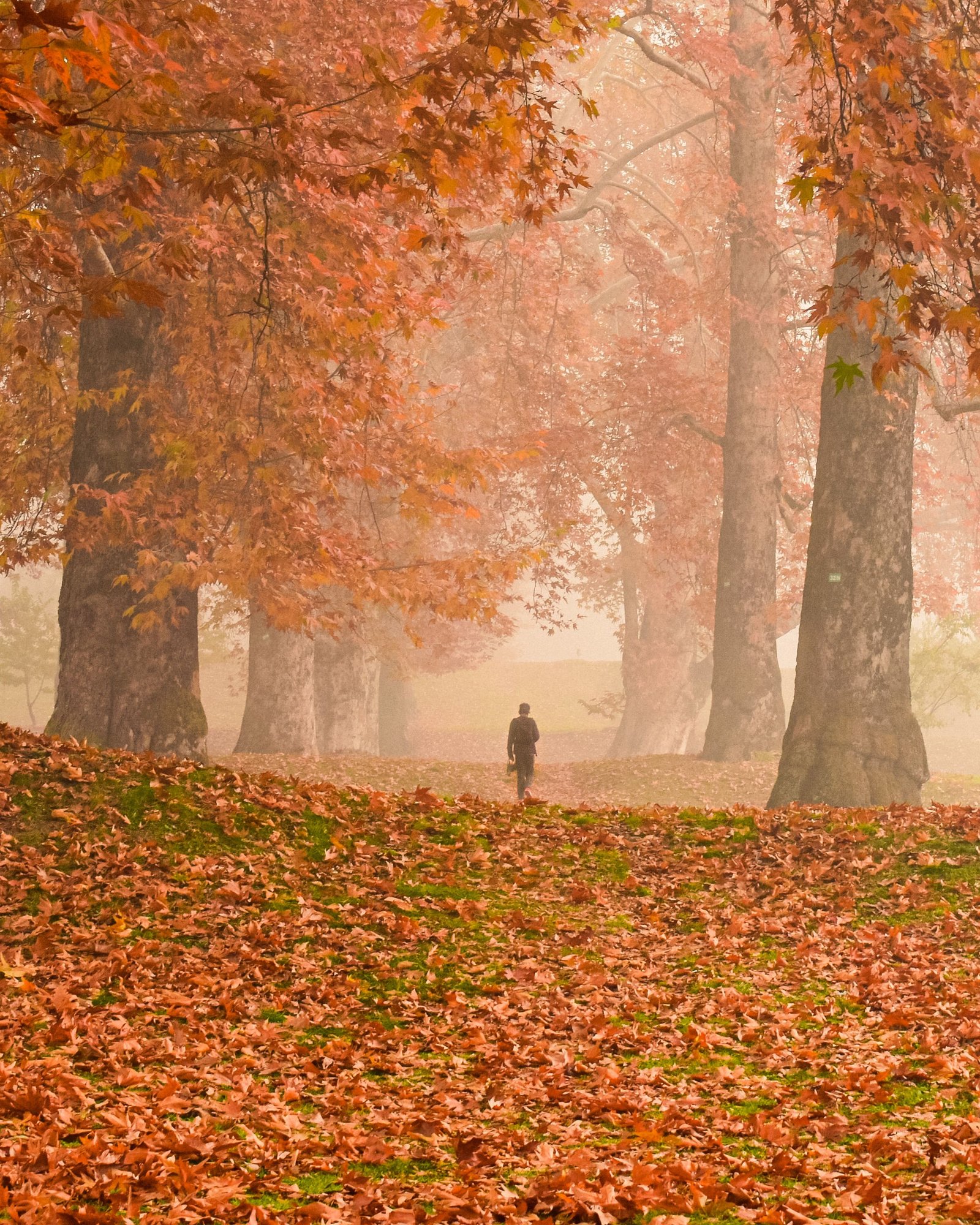
At the center of this ephemeral drama stands the Boin (Platanus orientalis, or Chinar), an ancient giant that has silently watched sultans, saints, and empires come and go. When the mountain winds sharpen, the Boin does not simply lose its foliage; it catches fire without burning, raining down a quiet avalanche of crimson and gold across the earth.
When Do Chinar Leaves Turn Red in Kashmir?
Short version: the colour builds through October and peaks in early November. Here's how Harud usually moves, though the exact dates shift every year with the weather:
- Late September: the green canopy starts to soften.
- Mid-October: leaves turn amber, then bronze.
- Early November: peak scarlet, and the leaf fall begins with the first morning frosts.
The Progression: From Sabz to Burning Embers
In late September, as the summer warmth fades, the deep sabz (green) canopy of the Boin begins to soften. Slowly, almost imperceptibly, the leaves pale into amber, then erupt into molten bronze by mid-October.
By early November, the phenomenon reaches its peak—a shade so fiercely scarlet that the legendary Persian moniker holds true: Che-nar—"What a fire!"
When the first morning frost bites the stems, the shedding begins. This is not a barren event; it is a lavish, auditory rebirth. Walking beneath the groves, every step yields that unmistakable, crisp crunch under your feet. The fallen dry leaves—the panchey—accumulate in foot-deep drifts along terraced waterways, stone pavilions, and damp earth.
Best Places to See Chinar Leaves in Kashmir
1. Naseem Bagh (The Realm of Fallen Amber)
Sprawled along the shores of Dal, Naseem Bagh is the spiritual home of the Boin. Planted centuries ago, thousands of ancient trunks stand shoulder to shoulder. In the heart of Harud, the entire orchard sheds simultaneously, burying the turf under an unbroken blanket of copper. Golden sunlight filters through the thin morning mist, turning every avenue into an unearthly corridor of light.
2. Shalimar and Nishat (The Royal Terraces)
Framed against the imposing slate-grey cliffs of the Zabarwan range, the stepped Mughal gardens offer symmetry to the wild shedding. The crimson leaves drop onto carved stone baradaris, swirl inside dry water channels, and float atop still ornamental pools. Here, you sit with a warm cup of Kehwa—steaming green tea infused with saffron, crushed almonds, and cardamom—listening to the dry rustle of leaves drifting down like fiery snowflakes.
3. Char Chinar (The Guardians of the Dal)
Venturing out on a carved wooden shikara, skimming through the glass-like waters of Bod Dal, brings you to the solitary island of Char Chinar. The four ancient trees shed outward, casting glowing reflections on the ripples. Half the leaves cover the tiny plot of soil, while the other half float on the dark, reflective water, ringing the wooden hull with rings of red and amber.
4. Bijbehara (The Ancient Canopy)
Away from the city buzz, south along the banks of the river Vyeth (Jhelum), lies Bijbehara—the historic hub of old-growth Chinars. The giants of Padshahi Bagh possess massive, hollowed trunks twisted by centuries of weathering. The shedding here feels wild, unpruned, and heavy with the scent of damp bark and mountain petrichor.
From Canopy to Hearth: The Life of the Fallen Leaf
In Kashmir, nothing in Harud is merely decorative. The shedding of the Boin serves a vital, life-sustaining purpose.
As the leaves pile up into thick dunes, families and garden keepers step out with wooden rakes. The brittle panchey are swept into smoldering, low-oxygen earthen mounds. This deliberate, slow-burning process transforms the golden leaf litter into t’soor—a light, fine, long-burning charcoal.
This charcoal is the lifeblood of the Kangri, the wicker-encased clay bowl held beneath the heavy wool folds of the Pheran to beat back winter temperatures dropping far below zero. The leaf that shaded the traveler in July turns to gold in October, falls in November, and becomes the ember that keeps the body warm through the deepest winter freezes.
To watch the Boin shed in Kashmir is not to witness the end of a season, but to watch the valley prepare its own warmth.
Chinar Season FAQ
When is the best time to see chinar leaves in Kashmir?
Mid-October to early November. The deepest reds usually come in the first days of November, just before and during the leaf fall.
Where can I see chinar trees in Srinagar?
Naseem Bagh, the Mughal gardens at Nishat and Shalimar, and Char Chinar island on Dal Lake (reached by shikara) are the classic spots. Bijbehara, south of Srinagar on the way to Pahalgam, has some of the oldest trees.
Is it cold in Kashmir during chinar season?
Days are mild and nights are cold. Srinagar's long-term averages for October are about 23°C by day and 6°C at night, dropping further in November, so pack a warm layer. If you are hoping to catch early snow on the peaks too, see our Kashmir snowfall guide.
Plan Your Harud Trip
Want to time your trip for the reds? Call or WhatsApp us on 7006085655 and we'll plan the gardens, a shikara to Char Chinar and a drive past Bijbehara around your dates. Still choosing where to go? Start with our list of Kashmir tourist places.